

Choir of Poems: An Interview With Jim Dine
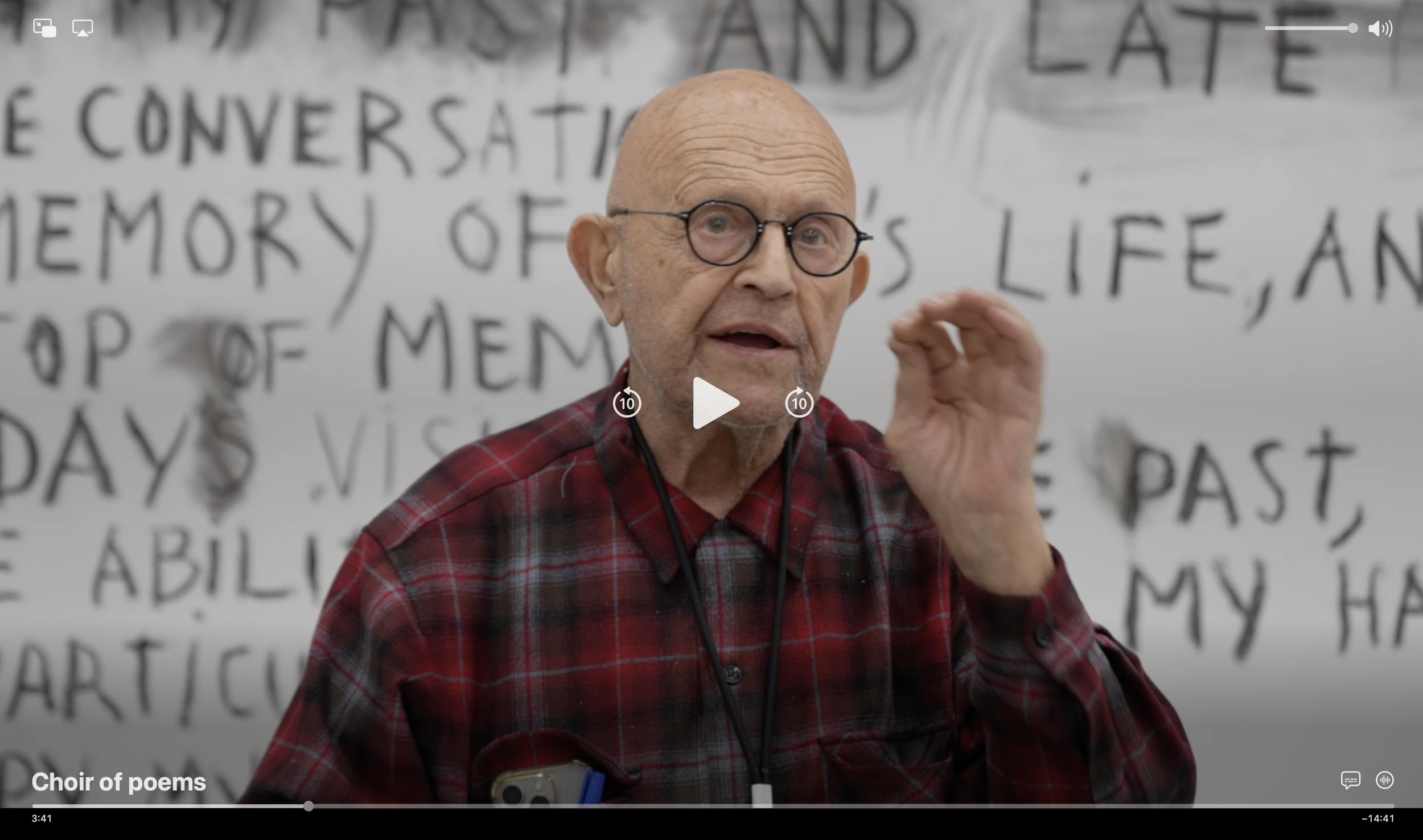
We’re pleased to share a new interview with Jim Dine, recorded by Daniel Clarke with Diana Michener and Olympe Racana-Weiler. In this conversation, Jim reflects on the role of memory in his work, the presence of people and places that continue to shape his thinking, and the quiet logic behind his paintings. Moving between childhood in Cincinnati, the studio, and recent bodies of work, he offers a clear and direct look at how meaning accumulates over time, not as narrative, but as lived experience embedded in form.
Read the entire interview below or to watch the filmed interview, click here.
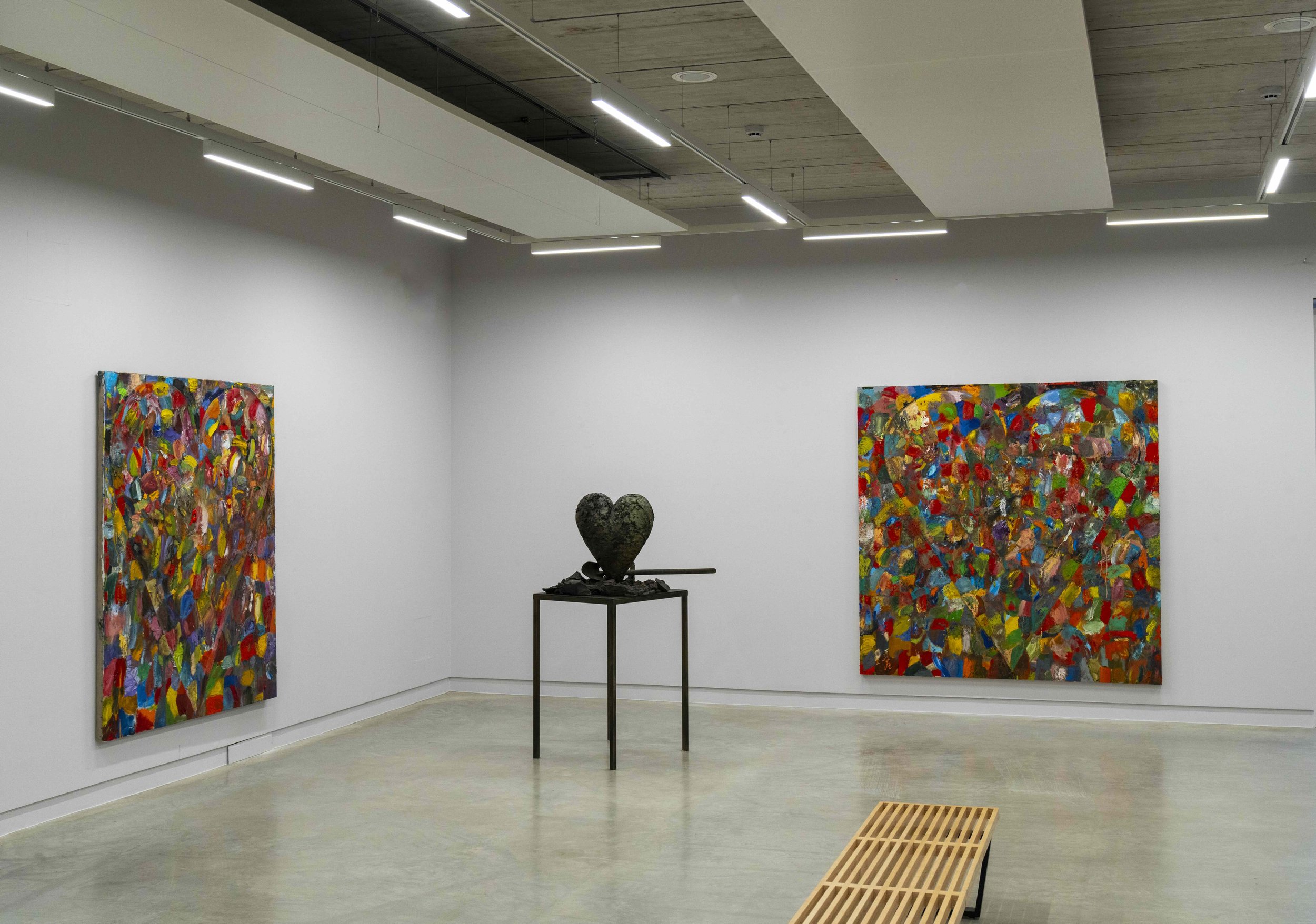
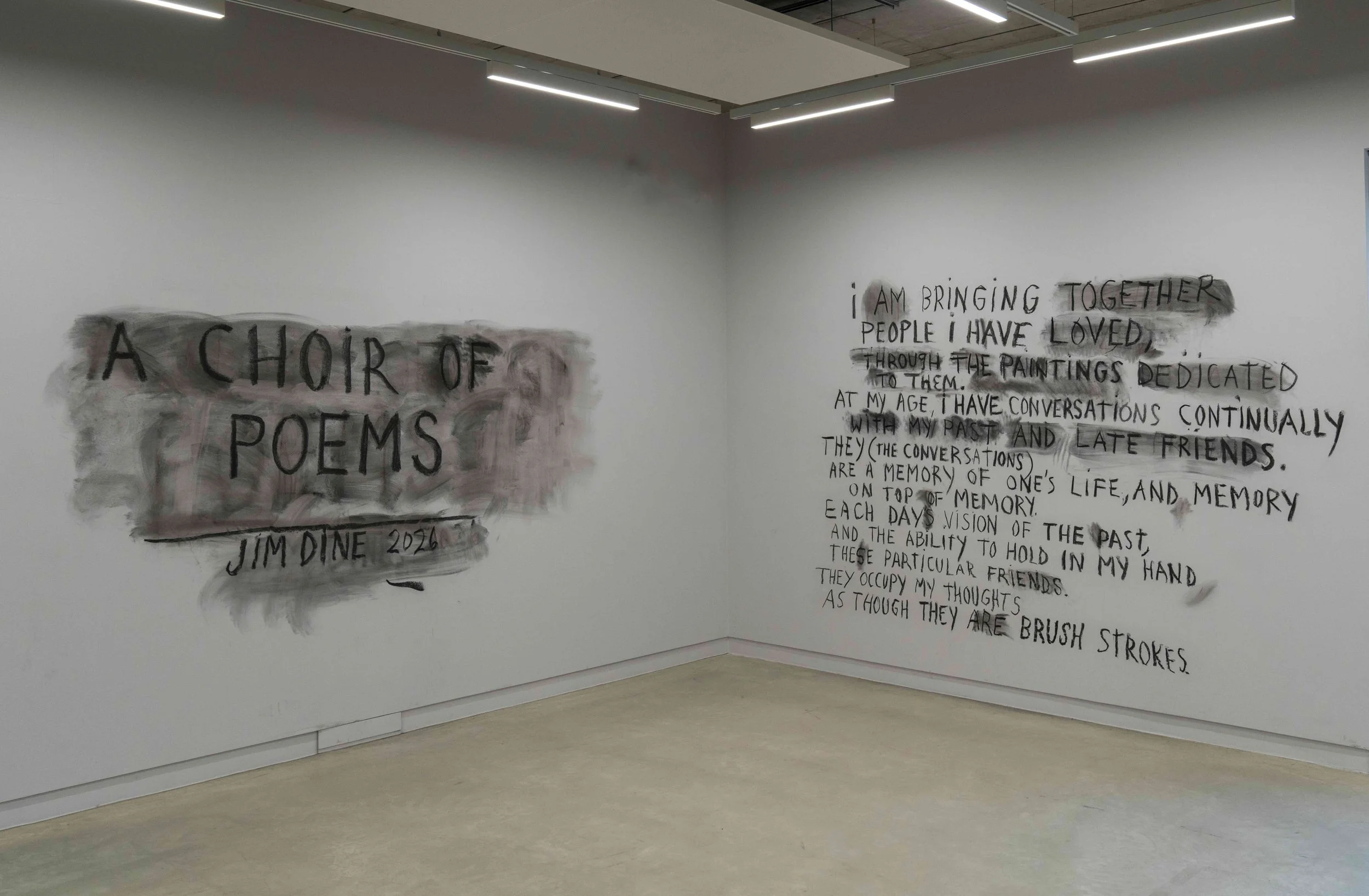
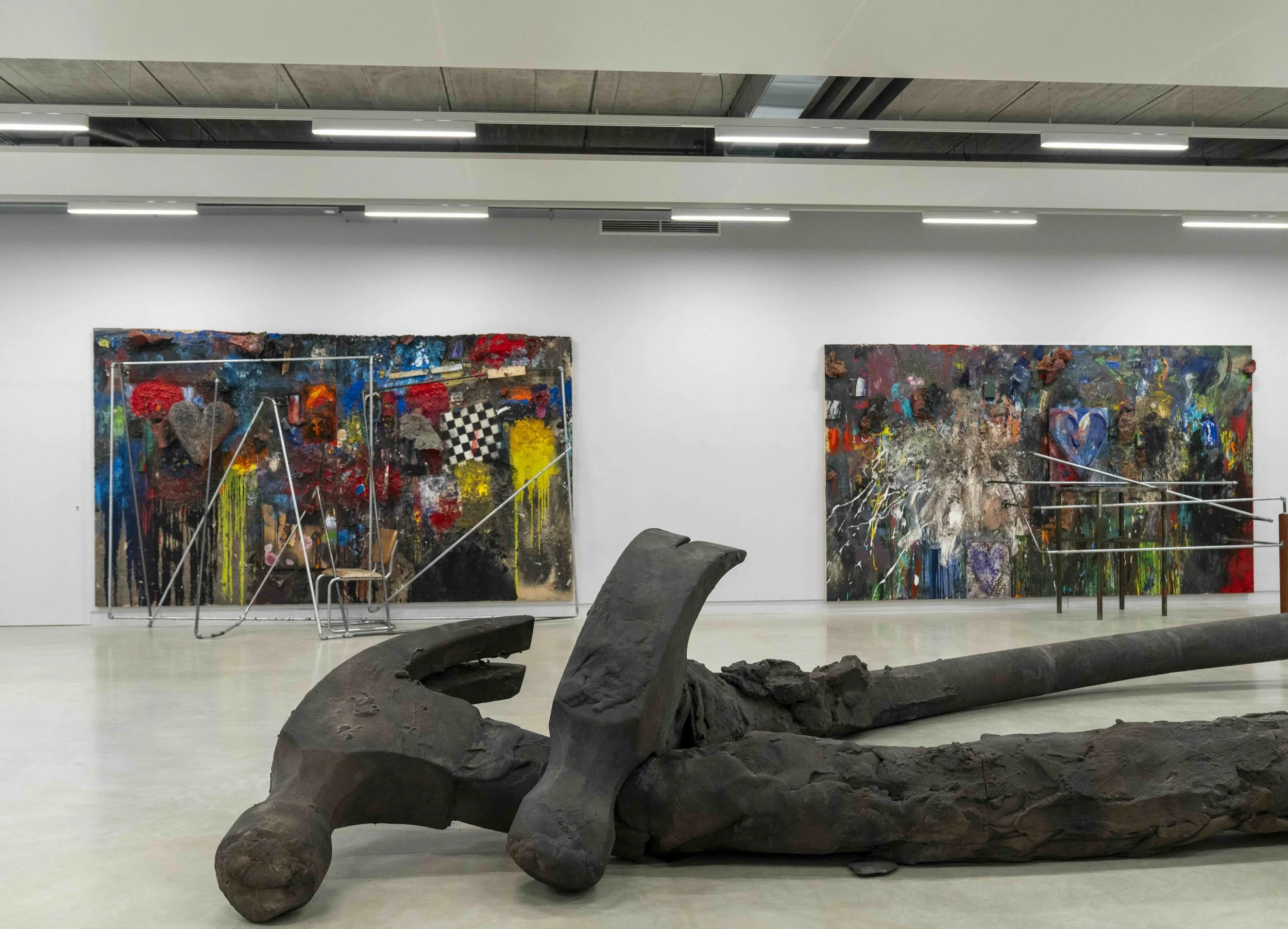
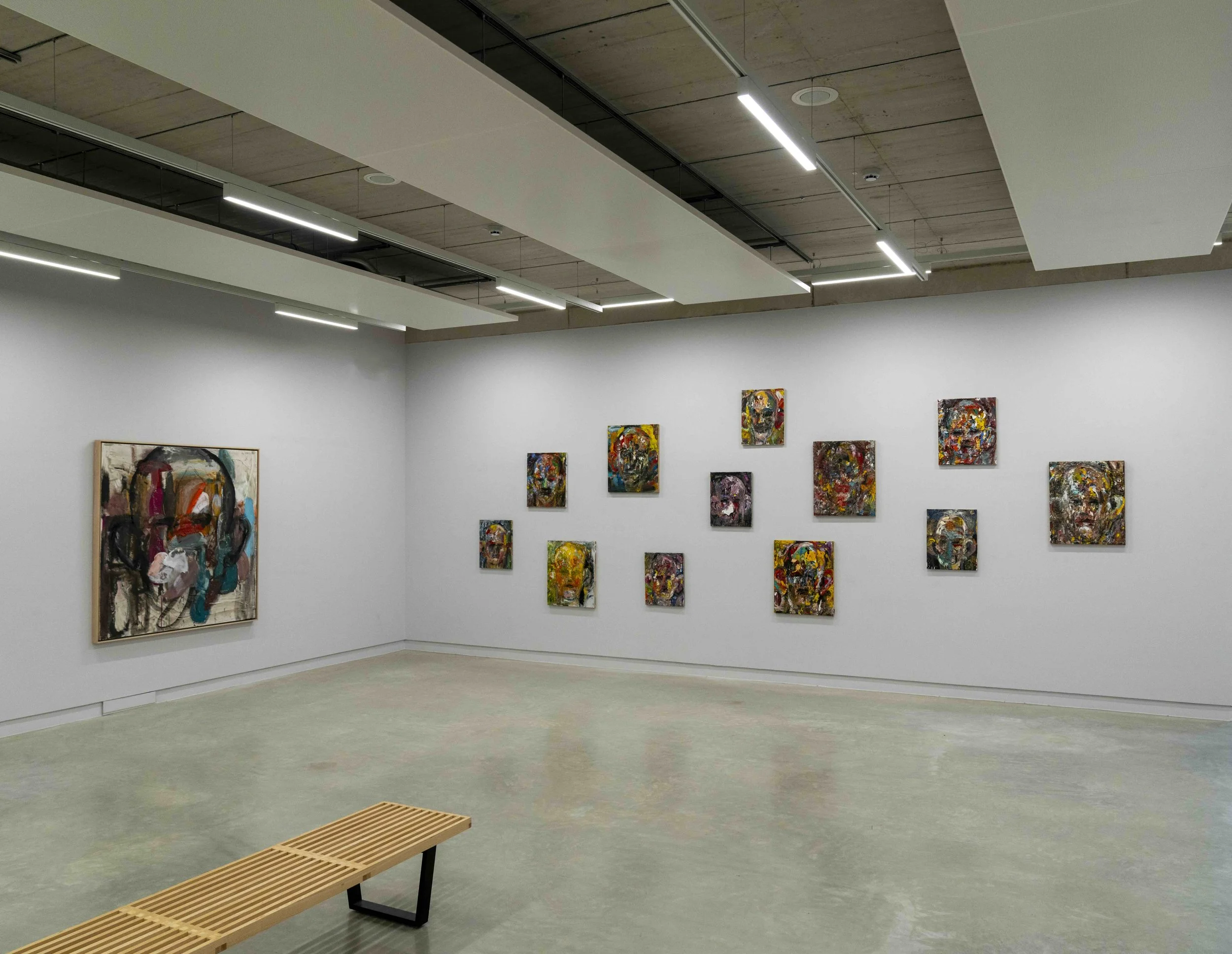
Installation, Choir of Poems, March 19 - August 28, 2026, Kunsthaus Göttingen
When you say that you're in the studio and you're thinking about your late friends.
When I say that, I mean that, for instance, when I made the painting of Clarence burning leaves, I went through in my mind, this is how it works for me. I went through in my mind this incident. this hot summer night I had when I was 16 years old with my cousin Clarence and I saw all the other people who, in his sphere, meant something to me as a teenager and made me go forward as an artist and gave me a memory that was extremely rich about humans and what atmosphere of, let's say, speaking their minds in freedom,a place which I did not come from. When I speak about late friends, I don't just mean my cousin Clarence. I mean his friend, Dr. Fritz von Hauer, who taught chemistry with him and who talked to me about other glazes. It just builds on each other, the memories. And I couldn't have done that 50 years ago. I didn't have it categorised as subject matter for painting.
On the other floor, you have a central subject, which is the portrait, the tools and the botanical drawings. In these three paintings, there is an absence of form, which started years ago, and with Grace and Beauty you had that, the fact of putting color and taking off color also, but keep going like that with layers of colors. I want to ask you if you needed to have next to you Clarence or Anne. I mean those titles were in a way on the road of the painting.
You mean, to get the painting going? Did I need it?
Yes, the memory of those figures as a relation of a room and a scene. the essence of a moment.
I understand what you're asking, but no, I had to begin those paintings, I had to begin with a blank, not absurdly, a blank canvas. And in my mind, a blank canvas. I knew with Clarence, with all of them, that I was going to name it that. But they are not realistic paintings in the sense that they're narratives. They're not narratives. They're realistic in that it's a chair and it's a real checkerboard, black and white, or it's yellow paint coming down, or it's a painting of a heart affixed there. But they are in honor of those people and while I was painting something so big and taking me so long; this all came after the show in Venice. And I see them, amongst other things, as the views of landscape or views of interior rooms. And I hope ( no...I do not hope, I am not that presumptuous...) I know myself that the individual people are in the rooms, but I don't expect anybody else to know that. It just helped me along. But the paintings themselves, without what you're speaking about, without the painting being a heart or a head with ears, the paintings themselves I see as, as I said, interiors or landscapes.
You're visiting late friends, but you're also visiting places.
Well, I have this group of drawings called 49 Views of the North Crescent. North Crescent, in 1935, it was a street in Cincinnati where in 1935 in June, when I was born, my mother brought me home as a little baby, to the North Crescent. It's where my grandma and grandpa lived, and where my father and mother lived in their house as guests because we had no money, and where my mother's brother lived. So I spent three years in the North Crescent, which was very formative for me visually and olfactory-wise, and it's where I got my first hammer from my grandpa and on the steps in the back of the house I rolled down the pipe when I was two years old. My toys were my grandpa's tools on the North Crescent. The light of the North Crescent is in my mind forever. And, there were so many things there. It was in what is called on Google the Jewish ghetto of Cincinnati at that time. It's changed. But that's what it was then. And, for instance, in the summertime, which was beastly hot in Cincinnati, we went to the swimming pool. It was called Phillips Swimming Pool. Maybe 200 yards from our house, there was a public pool. And, you know, I never forgot putting my feet into the disinfectant. I never forgot how a public pool looked in a small neighbourhood. It was populated by my neighbours. I was related to almost all the swimmers. When I say 49 views on the North Crescent, I'm memorialising this experience of early childhood. saying that I wouldn't be able to make those drawings, which I consider some of my most inspired that I've ever made. I wouldn't be able to make them if I hadn't had the experience on the North Crescent. Also, it's a great name for a street because we moved... I didn't move but my grandma and grandpa moved after I left two years later they moved to South Crescent, so it was like this, this was North and there was South Crescent. They lived there and then they lived here.
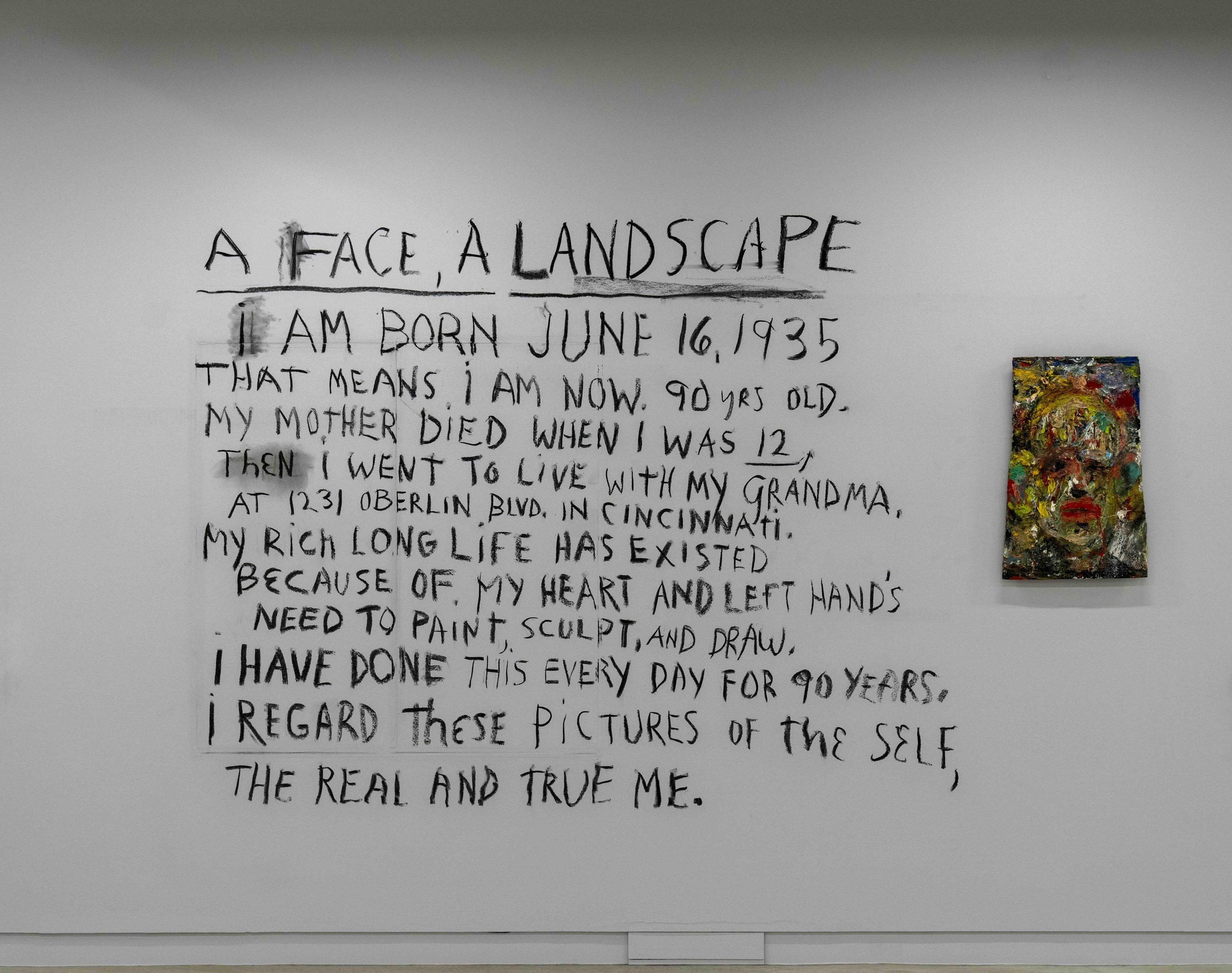
Coming to your self-portraiture: I love the word ‘landscape‘ in the title.
Well, I mean I do think that is a landscape, it is a personal landscape, and it can be read. If landscape means the topography of the ground, then this topography is personal, you know? This is as profound geographically as mountains and trees. I mean, if you're looking every day at yourself and regarding yourself, and regarding yourself not necessarily in a narcissistic way, but in a curious way, and if you're watching the tissue be torn by gravity down, then you are viewing a vast landscape and something taking place and moving, moving like lava or moving like a tree grows. And that's what's happening, you know? I mean, since I reached puberty, I grew a beard, as the years have gone by and I get to this late stage in looking at the landscape, the beard's going. So it's changing. The leaves are falling.
The painting versus the title, this association, the heart paintings, the family in Ohio, in the catalog, as you call it.
Well, as I always say, my titles were another element in the painting. you're able to see what my hand did. That's another aspect of the painting. So the titles of that. I didn't know what to call these paintings. You know, I could have called them one, two, three, which is boring. I thought I would instead give them names obscure for me, members of my family from childhood. And it gave me a laugh. Because there's so many stories about those specific people, but the title literally has nothing to do with the painting, other than it's the title of the painting. It's like the jar, it's the lid on the jar of pickles.
But don't you think often you give the title after the painting?
That's what I did.
No, but in other paintings.
Other paintings too, sure.
You don't start with the title.
Sometimes. With Ann Arensberg and Clarence I did. And with Ileana I certainly did because it was a year later or two after these two paintings and I wanted to memorialise her name.
Is there a relationship to the Elysian Fields in that way? By that I mean if you thought about Eliana with the painting and you're thinking about a particular head, or the heads that you want to add to that series of 23, now 24?
Well, I mean, I want to say that the Elysian Fields, with the heads in plaster, some of recognisable people I know and others are new, and I don't want it to be a cemetery, you know? I want it to be something alive, and as I said, it's a place where heroes go. So, it is like that. Yes, it is like that. So, you know, Ann Arensberg gets a painting and, the ape and cat get themselves. But I don't want it to be, you know, something maudlin. It isn't. I mean, Ann, Clarence and Eliane are dead, but they're not dead - for me, they're alive. Ann Arensberg, she died from COVID in 21 or 22. And I hadn't seen her in 30 years, but she's present in my life, present. So it's not a memorial.
How do you think the new openness that you have written affects how people see your work?
I don't know because I haven't spoken to anybody who I don't know well about it, like to the general public who's read it. But I know that by doing it, I'm aware that I'm as open as I can be.
Do you think by any chance that by your telling us what you feel when you made the work and what your vision is, do you think that censors our ability to bring our own self to the work?
Oh no, I think it amplifies your ability.
You do?
I would hope so, by me exposing myself. by me saying what I mean, I hope other people will think in a clearer way about the work. That's what I would hope.
That's interesting. It could be a censor.
It could be what?
A censor. I mean, well, it might be intimidating.
Oh, I see. Well, as they say...
Talk about Rome. Drawing in Rome. The idea, where did it come from? I mean, you have a lifelong relationship to the city.
Right. I was invited by Gianni Dessi, who was at the time the president of the Academy di San Luca in Rome, and they had just made me an honorary member, to make an installation there - flowering sheets. And at the same time, he took me one day to see the church that the Academy owns. It's not a deconsecrated church. It just isn't in much use. I think it's so in not use that they sometimes had a priest on Saturdays do the Mass, not Sunday. There was just, nobody was there. But it was a beautiful church. And so I thought, I guess it was the next year or a few months later, next year I think, next winter, I asked them if I could go there and draw objects. I mean, it had a crypt, it had, from various periods of art and life in Rome, sculptures and reliefs and religious objects. And I took two of the people that worked with me and we made drawings there. And there was no idea of an exhibition or anything. It's something I wanted to do. It was a luxury, but it was a pleasure. And it's one of the reasons I'm lucky to be an artist. It doesn't memorialise Rome for me. I think they're about drawing, not about Rome.
That was really the sense of my question, because you worked on them for another year or two in Paris.
I mean, I still do. I think the two drawings that are not framed, I would work on them and go back to my studio. Because you mentioned that they were there, I'm going to pin them up and see what I'm going to do.
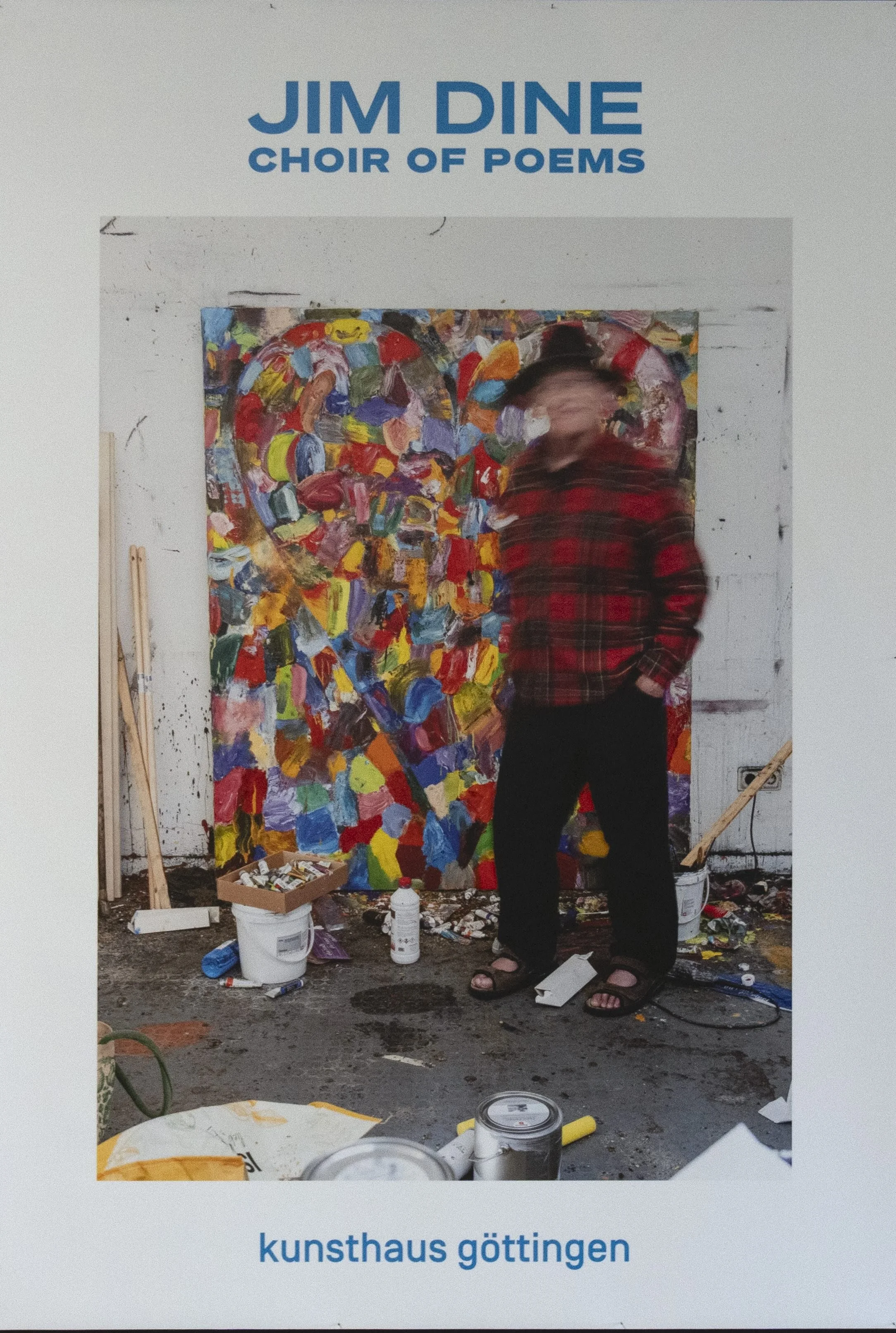
Jim Dine: Choir of PoemS
March 19 - August 28, 2026
Kunsthaus Göttingen,
Düstere Straße 7, 37073 Göttingen
Tue-Fri 2pm to 6pm
Sat + Sun 11am to 6pm
Price: Regular €8 / Concession €5
Choir of Poems Interview, March 2026
Interviewer: Daniel Clarke with Diana Michener and Olympe Racana-Weiler
Camera: Daniel Clarke
All newsletter photography by Daniel Clarke